Youth-friendly STI testing at Baltimore City Health clinics
CONTEXT
With increasing instances of youth aged 15-24 representing new STD and STIs cases reported to the Baltimore City Health Department (BCHD) in 2012, it was important to be attuned and responsive to youth needs around sexual health and their testing experience at health clinics. Through a grant funded by the CDC, the BCHD, Johns Hopkins Center for Child and Community Health Research (CCCR), and the Center for Social Design at Maryland Institute College of Art (MICA) had been working collaboratively to design, implement, and test interventions to increase access to and normalize STI testing for Baltimore youth.
I was part of the MICA graduate student team in the 2016-2017 academic year where we worked to better understand the issue and the challenges that young people face leading us to develop early insights and prototypes. In Spring 2017, I was part of a smaller design and implementation team that focused on the testing experience at one BCHD clinic. I conducted qualitative research at the clinic, designed testing process flows, prototyped informational materials, and conducted site-based evaluation.
-
2016-2017
-
Baltimore City Health Department
Johns Hopkins Center for Child and Community Health Research
Center for Social Design at Maryland Institute College of Art
-
Project lead: Becky Slogeris, MICA
Graduate student designers: Devika Menon, Molly Reddy, Smile Indias, Matthew Barr, Maria Garcia Diaz, Rachel Serra
APPROACH
Research: Conducted landscape research, completed individual testing journeys, observed clinic spaces, interviewed clinicians and City health department staff.
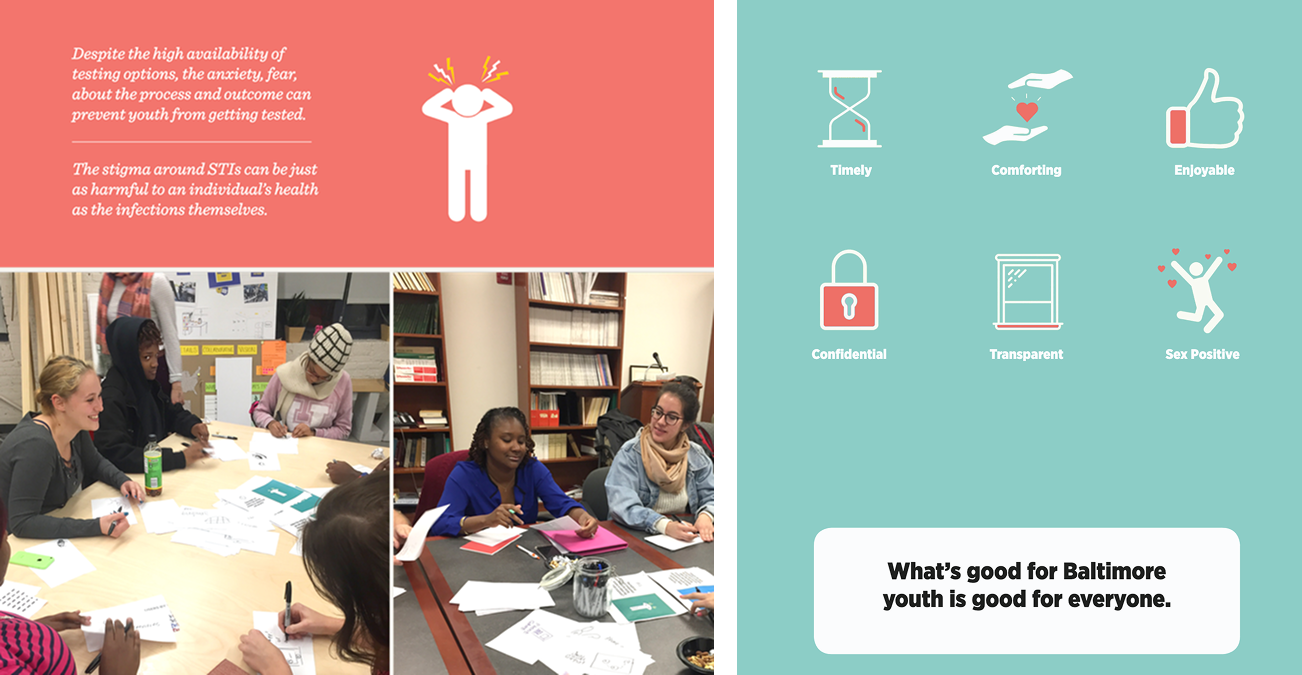
Opportunity definition: Synthesized insights and conducted brainstorming and prioritization workshops with with Baltimore youth, clinicians, and City health department staff.
Design and testing: Worked closely with one BCHD clinic, Eastern Health Center, to further break down the testing service experience and staff processes.
OUTCOMES
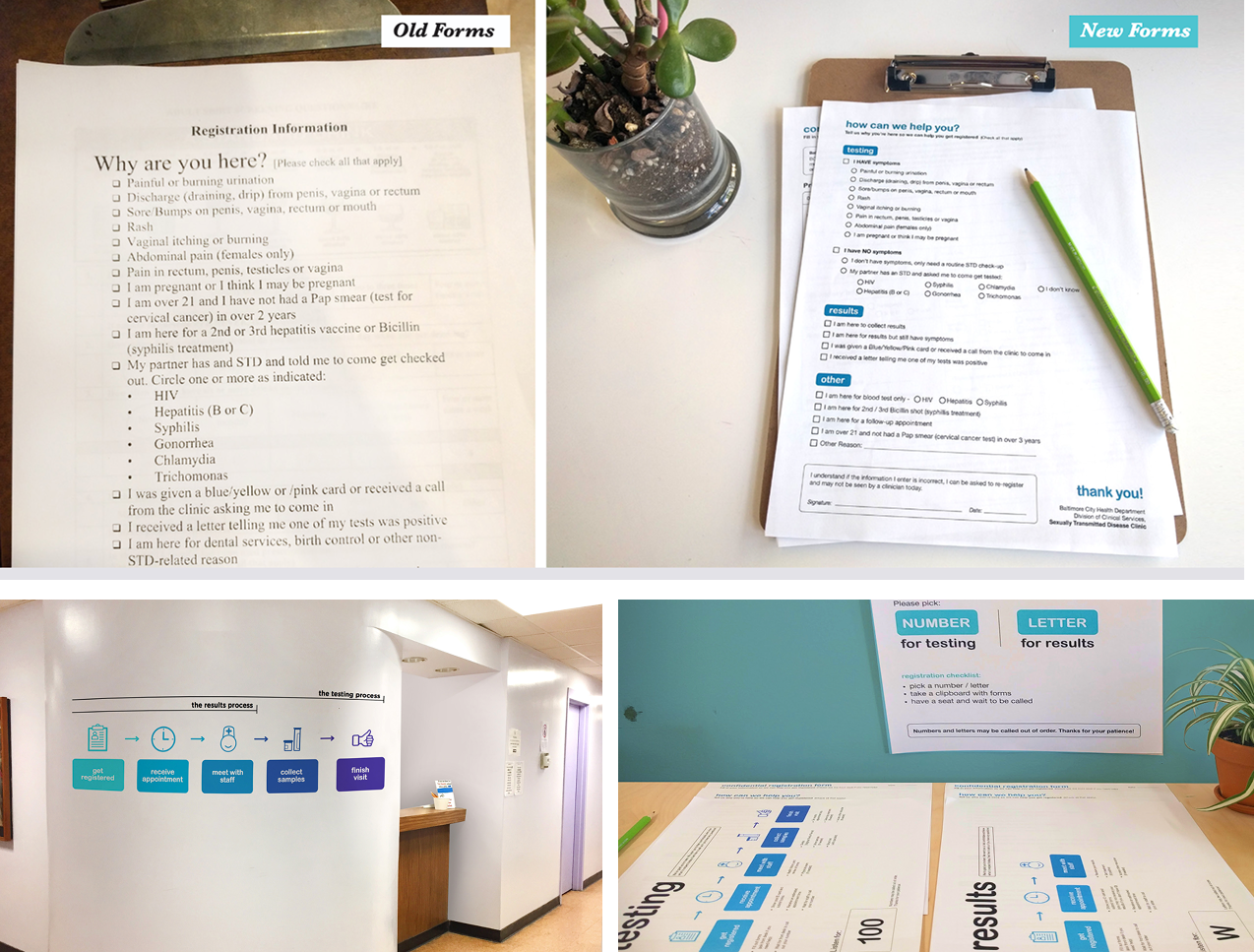
Registration and triage forms redesigned so they’re easy to interpret and support more accurate and efficient triage of youth patients.
Testing process maps to increase transparency and predictability around the testing process and reduce the fear and anxiety many youth feel while seeking testing
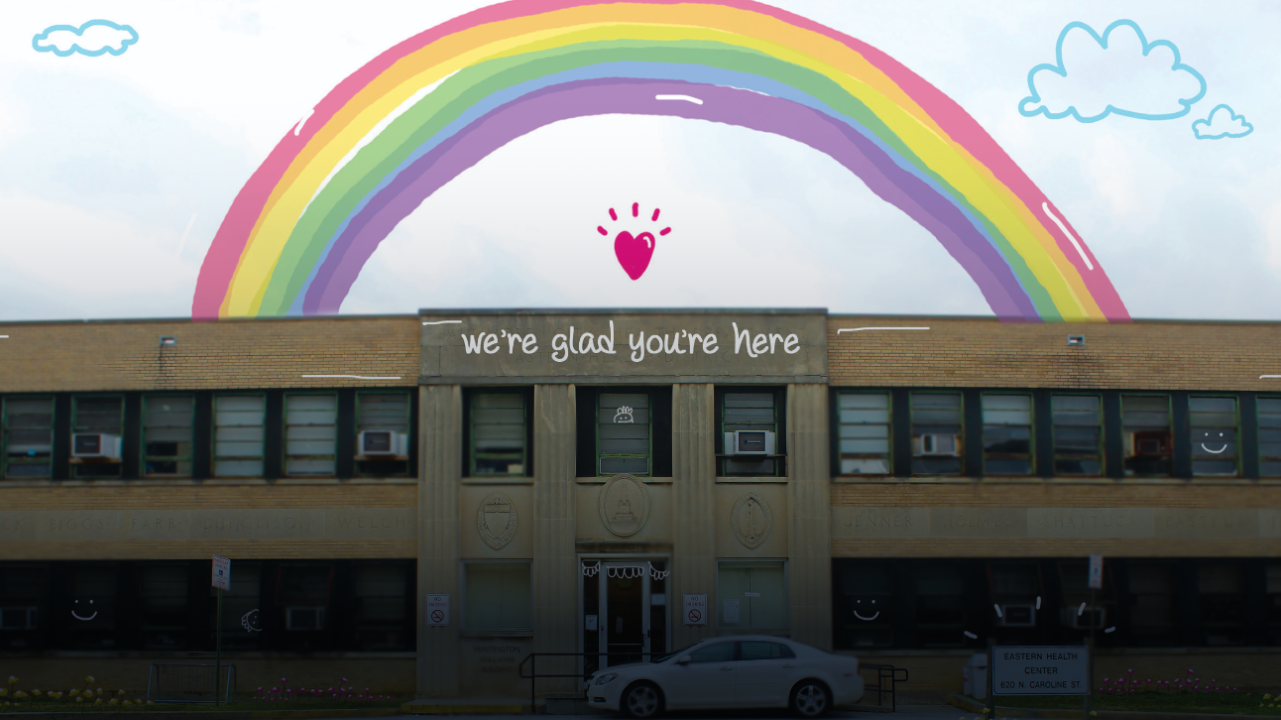
Clinic signage mock-ups and other space-based ideas like a staff photo wall to create a more navigable and welcoming environment.
Implementation guide for the project team and BCHD staff to build out and implement prototypes that were tested at the site. The guide included mock-ups, branding and messaging, along with implementation steps.