Employee workplace protections and complaints processes
CONTEXT
When the City of Philadelphia’s employees experience issues like discrimination, harassment, or misconduct in the workplace, they can report this behavior to supervisors, HR managers, senior leaders, or City agencies who are tasked with addressing employee concerns. Employees experience barriers like limited awareness on reporting pathways, fear of retaliation, or concerns that their situation won’t change.
Six City agencies handle different aspects of workplace protections from how instances of discrimination, harassment, or misconduct are received, triaged, investigated, addressed, and reported on. Inconsistent practices, communication channels, and infrastructure limit how these offices collaborate and handle issues within their mandates and purview. As a result, employee complaints can fall through these gaps or become hard to track.
The PHL Service Design Studio team partnered with the six agencies to improve how the City of Philadelphia addressed employee workplace issues and provided a safe and inclusive workplace. This project was conducted at a time the City was preparing for a new incoming administration and so it was structured around short-term actions and future-oriented goals.
-
2023
-
City of Philadelphia’s
Department of Labor, Employee Relations Unit
Office of Diversity, Equity, and Inclusion
Office of the Inspector General
Office of Human Resources
Office of the Chief Administrative Officer
Office of the Employee Ombudsperson
-
Project lead: Devika Menon, Senior Service Design Strategist
Project support: Veronica Yeung, Lead Service Designer
Project oversight: Liana Dragoman, Executive Director
APPROACH
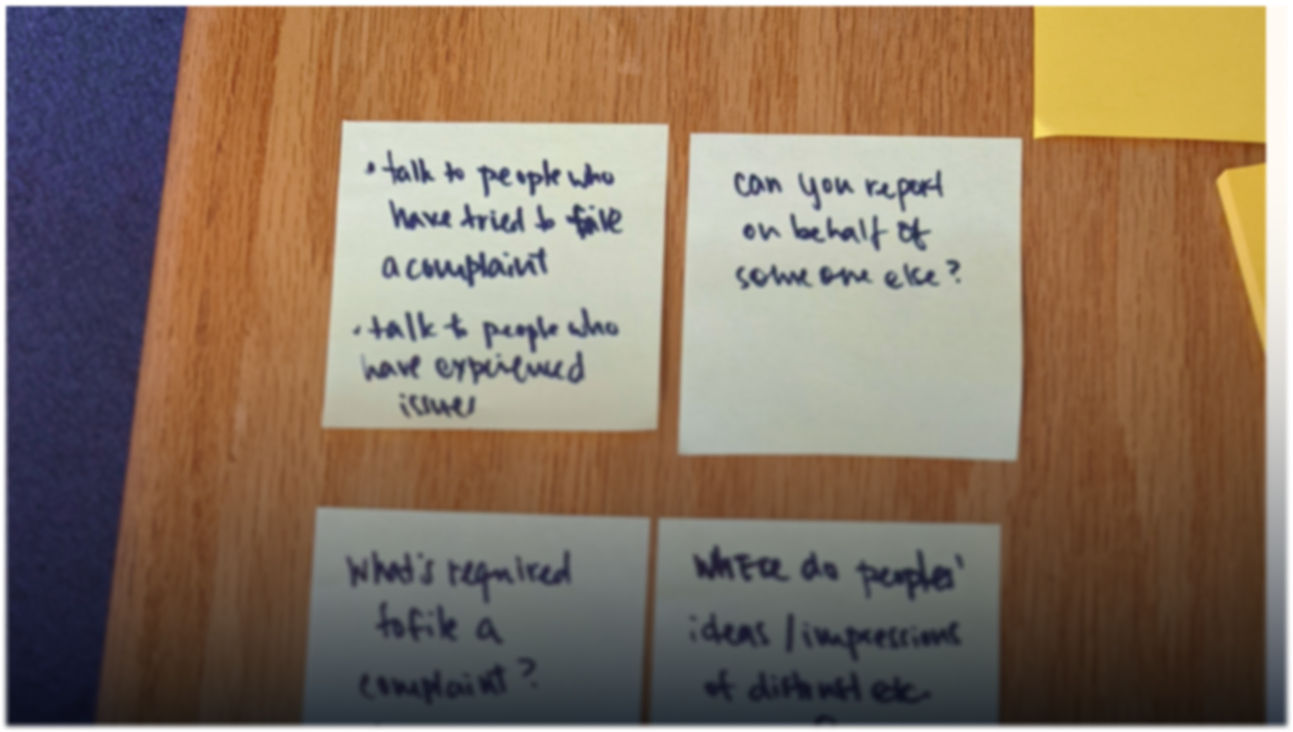
Research: Conducted 17 semi-structured interviews with departmental HR, supervisors, department heads, and integrity officers on process of handling cases. Engaged 47 employees through focus-groups and over 1300 participated in an anonymous online survey. Reviewed academic literature to fill gaps in our research methods since we were adressing a sensitive and legally-constrained subject matter.
Strategy and opportunity definition: Synthesized research into stakeholder needs and priority areas, which supported discussions and brainstorming about new improvements. Weighed constraints, existing initiatives, and implementation constraints, and made decisions on improvements to move forward in the near and long term.
Design and documentation: Developed tools the agencies could use immediately, documented learnings so they could continue planning and decision making as a collective, and detailed recommendations the group could propose to the new administration.
OUTCOMES
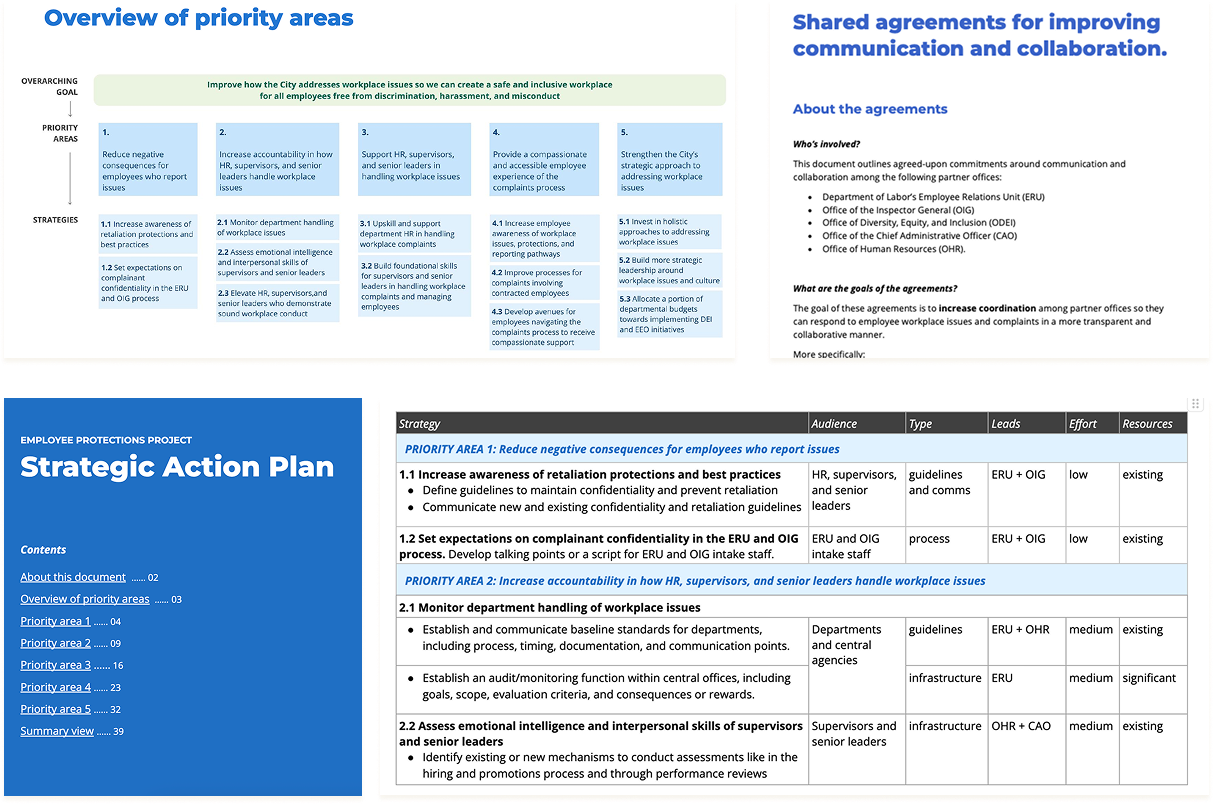
Collaboration agreements: Developed shared agreements signed by six partnered agencies to increase coordination, address communication gaps, and clarify each agency’s role in handling employee concerns so that reports of workplace issues were referred to the right office.
Strategic action plan: Documented improvement recommendations across priority areas, organized into short and long-term priorities with resource needs, agency collaboration, implementation requirements. The document served as a planning tool for the agencies to discuss and decide next steps.
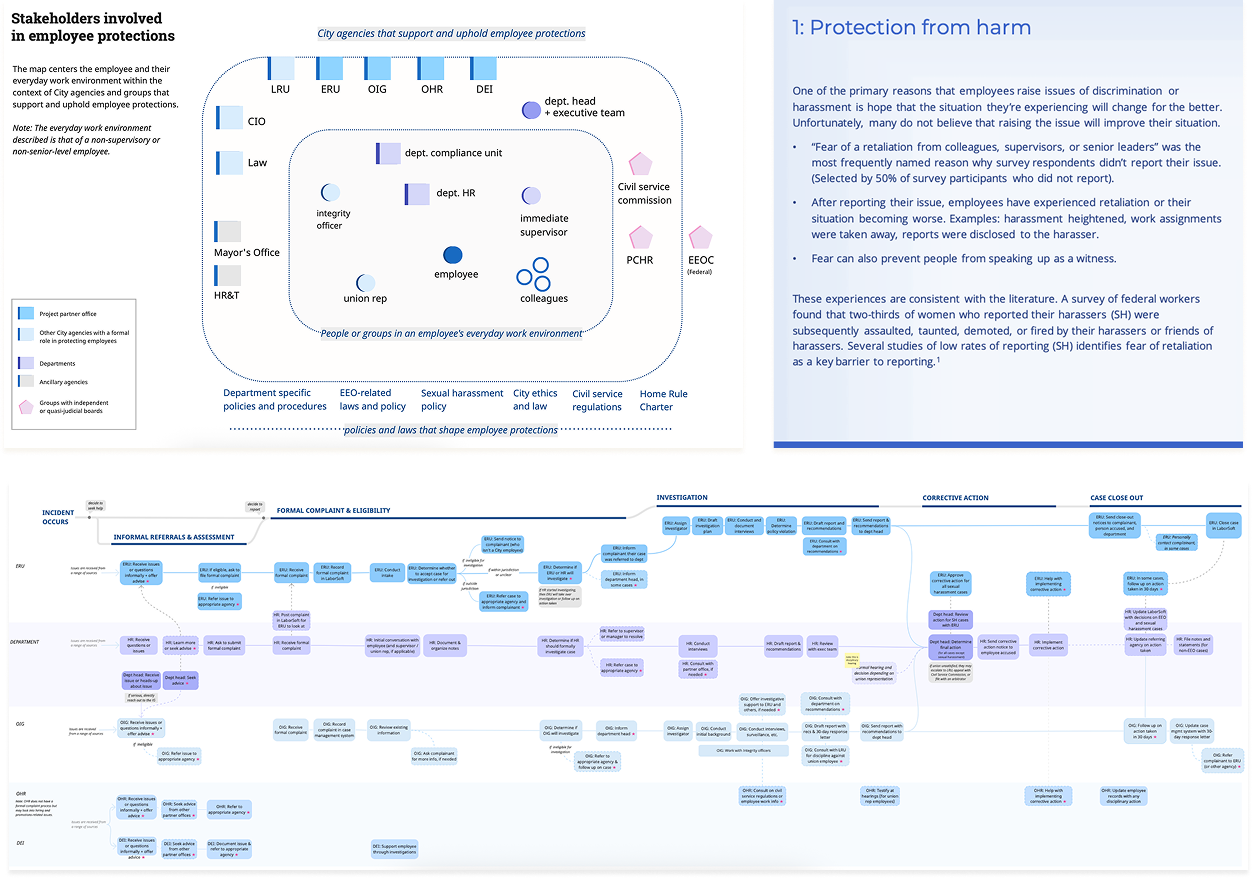
Current state documentation: Created several process maps and visuals detailing the stakeholder ecosystem, domain areas, process and procedures, and unique scenarios for each partner agency.
Supported the development of four additional tools and deliverables led by other team members including an employee-facing communication plan, two preliminary assessment and triage tools, and a project report.
The research we conducted built a shared understanding for the different agencies of the current employee experience, the role and purview of each agency procedures, and the journey of a complaint. Over the course of the project, the newly hired Employee Ombudsperson, used the research findings to orient to the landscape and shape the new office’s services to employees. The Ombudsperson continued to organize the group to discuss and move through the recommendations beyond the project.
IMPACT & NEXT STEPS