Zoning appeals service experience and administrative operations
CONTEXT
Philadelphia's Zoning Board of Adjustment (ZBA) hears roughly 1500 cases per year where they decide on zoning variances, special exceptions, and appeals of permit decisions. ZBA hearings are quasi-judicial with independent board members and supporting administrative staff embedding in the Department of Planning and Development (DPD).
Financial costs, legal requirements, technical knowledge, and complex processes make it incaccessible for everyday Philadelphians, who often don’t have legal representation. While appealing to the ZBA is a public service, Philadelphians shouldn't require technical knowledge or legal representation to appeal to the board.
Zoning decisions aren't just administrative. They shape what gets built, who can afford to stay and whether residents have a say in decisions impacting their neighborhoods and communities. ZBA service sits within the larger context of a high volume of development in Philadelphia's underinvested neighborhoods, affordability concerns, and fear of displacement—all of which bubble up at zoning hearings.
ZBA and DPD partnered with the PHL Service Design Studio to holistically understand the service experience from a multi-stakeholder perspective and document their administrative operations to improve staff and applicant experiences.
-
2021-2022
-
Zoning Board of Administration and the Department of Planning & Development, City of Philadelphia
-
Project lead: Devika Menon, Senior Service Design Strategist
Project support: Veronica Yeung, Lead Service Designer
Project oversight: Liana Dragoman, Executive Director
APPROACH
Research and understand
Observed virtual hearings, conducted secondary research on Philadelphia’s landscape and impact of zoning, and facilitated one-on-one interviews with 55 stakeholders across the full ZBA ecosystem which included eight distinct stakeholder groups—including applicants, processing staff, community organizations, council representatives, attorneys, and planning commission staff.
Synthesis and opportunities
Shared back insights and facilitated eight collaborative synthesis sessions with the ZBA team to collectively make sense of findings. Organized stakeholder-recommended ideas across processes, information, tools, technology, and policy, and prioritized them by complexity, challenge area, and ZBA’s scope.
Document and prioritize
Facilitated working sessions with the ZBA administrator and supervisors to document processes and administrative protocols in detail. Assessed and prioritized recommendations that would allow the ZBA to make informed, evidence-based budget requests.
OUTCOMES
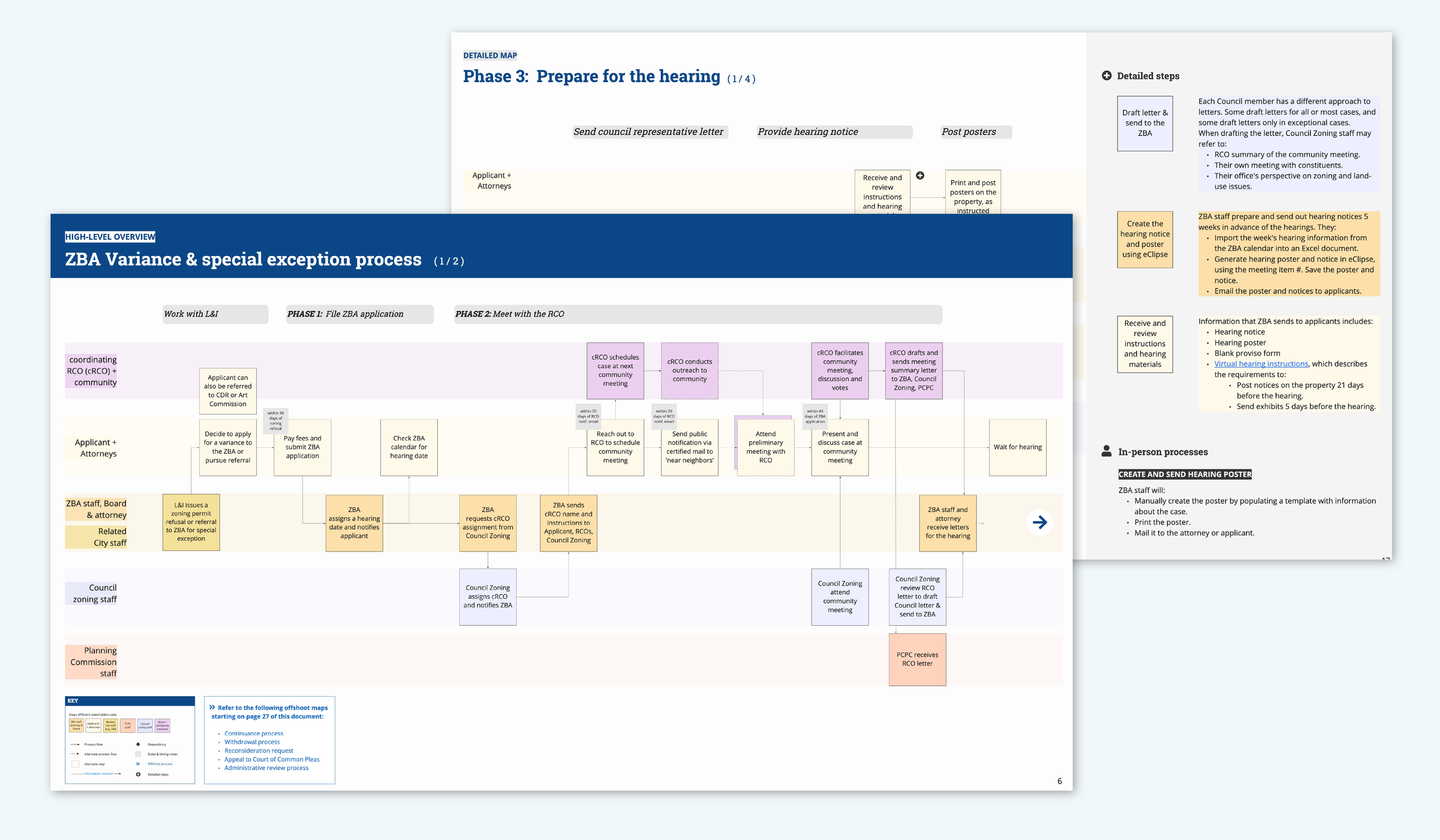
Process maps and blueprints detailing ZBA's operations, procedures, and unique scenarios.
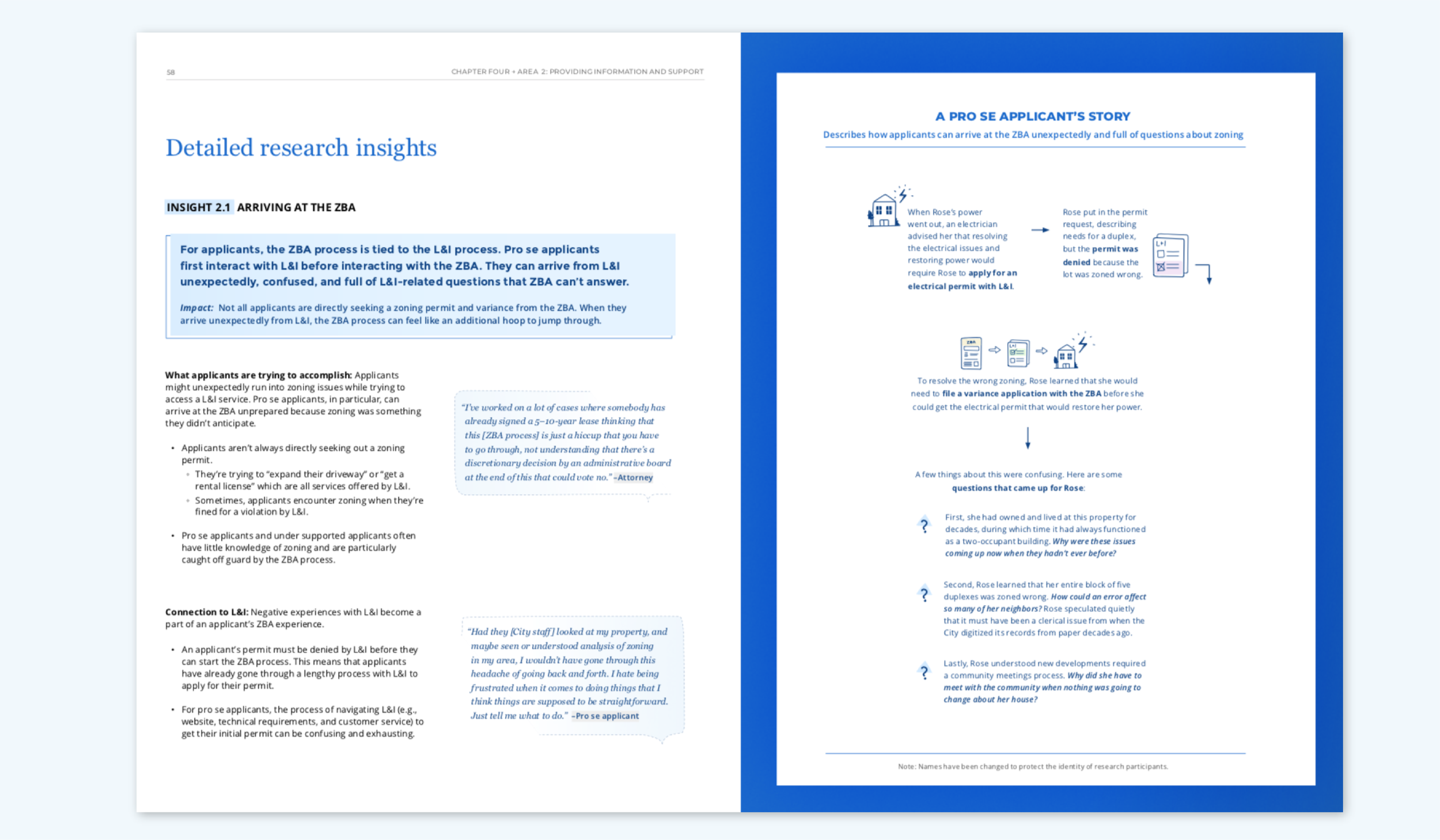
Research insight deck organizing stakeholder applicant and staff experiences across the hearing experience from processing applications, coordinating community meetings, preparing for hearings, hearing operations, and coordinating with various groups.
Improvement roadmap: A prioritized set of service improvements prioritized that accounted for research insights, legal constraints, budgetary requirements, and operational feasibility.
Comprehensive project report that documented the work for internal audiences to make service decisions and eventually for the general public.
IMPACT & NEXT STEPS
The ZBA team used the process maps and project documentation to hire and onboard new employees. They also submitted budget requests for specific improvements and identified several improvements they could begin implementing with existing resources.